


Thescience
How Patch is making meaningful climate action everyone’s business
Our planet is out of balance
Since 1880, our atmosphere has warmed by 1.1º C due to human activity.1 The consequences are already hazardous: record heat waves, intensified storms, droughts, and mass extinctions of plants and animals.
We must limit warming to 1.5ºC to mitigate the worst impacts of climate change — the first step toward rebalancing the planet.
1Perkins, L. “NASA SVS: Global Temperature Anomalies from 1880 to 2022.” Scientific Visualization Studio. NASA, January 12, 2023. https://svs.gsfc.nasa.gov/5060.
Perkins, L. “NASA SVS: Global Temperature Anomalies from 1880 to 2022.” Scientific Visualization Studio. NASA, January 12, 2023. https://svs.gsfc.nasa.gov/5060.

Reducing emissions isn’t enough
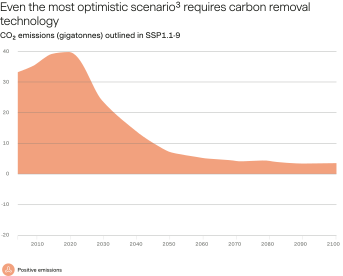
According to the IPCC, there’s no pathway to holding global warming to 1.5°C by reducing emissions alone.2
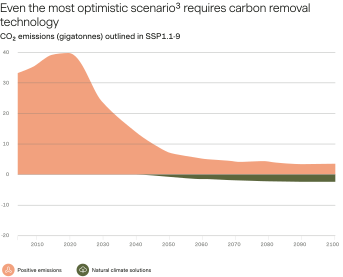
Even restoring Earth’s natural decarbonization systems won’t get us all the way there.
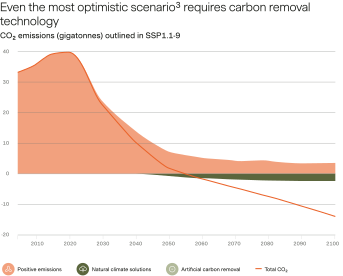
All paths to a rebalanced planet require global-scale carbon removal technologies.
2IPCC, 2018. Global Warming of 1.5°C. An IPCC Special Report [Masson-Delmotte, V., P. Zhai, H.-O. Pörtner, D. Roberts, J. Skea, P.R. Shukla, A. Pirani, W. Moufouma-Okia, C. Péan, R. Pidcock, S. Connors, J.B.R. Matthews, Y. Chen, X. Zhou, M.I. Gomis, E. Lonnoy, T. Maycock, M. Tignor, and T. Waterfield (eds.)]. Cambridge University Press, Cambridge, UK and New York, NY, USA. https://www.ipcc.ch/sr15/chapter/chapter-2/
IPCC, 2018. Global Warming of 1.5°C. An IPCC Special Report [Masson-Delmotte, V., P. Zhai, H.-O. Pörtner, D. Roberts, J. Skea, P.R. Shukla, A. Pirani, W. Moufouma-Okia, C. Péan, R. Pidcock, S. Connors, J.B.R. Matthews, Y. Chen, X. Zhou, M.I. Gomis, E. Lonnoy, T. Maycock, M. Tignor, and T. Waterfield (eds.)]. Cambridge University Press, Cambridge, UK and New York, NY, USA. https://www.ipcc.ch/sr15/chapter/chapter-2/
3Rogelj, J., Popp, A., Calvin, K.V. et al. Scenarios towards limiting global mean temperature increase below 1.5 °C. Nature Clim Change 8, 325–332 (2018). https://doi.org/10.1038/s41558-018-0091-3
Rogelj, J., Popp, A., Calvin, K.V. et al. Scenarios towards limiting global mean temperature increase below 1.5 °C. Nature Clim Change 8, 325–332 (2018). https://doi.org/10.1038/s41558-018-0091-3
4SSP1.1-9 is the IPCC’s most optimistic SSP (Shared Socioeconomic Pathway), in which global CO2 emissions are cut to net zero by 2050.
SSP1.1-9 is the IPCC’s most optimistic SSP (Shared Socioeconomic Pathway), in which global CO2 emissions are cut to net zero by 2050.
All three approaches are necessary

Reducing emissions is critical
Every country, organization, and person must reduce their carbon emissions as much and as rapidly as possible. This is the most important step. No plan will be successful without dramatic emissions reductions.

Restoring natural systems is vital
Our planet has built-in systems to regulate the amount of carbon in the atmosphere. By restoring the balance of our oceans, forests, and landmass, we can rely on these natural systems to help bring the planet back to balance.

Engineered carbon removal is essential
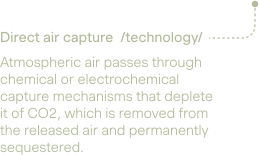
We’ll need engineered carbon removal projects like Direct Air Capture (DAC) alongside long-lived, durable sequestration solutions. We already have technology to do this, but we’ll need to scale it up quickly.

We provide seamless access to carbon credits
Carbon credits are powerful market-based tools to drive billions of dollars toward incentivizing the development and scaling of innovative climate projects, and flexible enough to evolve with the technology landscape.5
5University of Oxford Smith School of Enterprise and the Environment. Hepburn, C., Otto, F., Seddon, N., Malhi, Y., FRS, Allen, M., Caldecott, B., . . . Smith, S. (2020). The Oxford Offsetting Principles (pp. 1-15, Rep.). Oxford, United Kingdom: University of Oxford.
University of Oxford Smith School of Enterprise and the Environment. Hepburn, C., Otto, F., Seddon, N., Malhi, Y., FRS, Allen, M., Caldecott, B., . . . Smith, S. (2020). The Oxford Offsetting Principles (pp. 1-15, Rep.). Oxford, United Kingdom: University of Oxford.
How carbon credits work
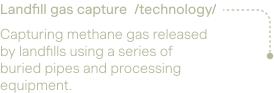
Avoiding additional CO₂ emissions
Removing CO₂ from the atmosphere
Patch completes the climate equation
All solutions are needed to stop and reverse climate change. Dramatic emissions reductions, measurement and accounting of emissions, and carbon removal projects are all necessary to maximize our collective opportunity to make a livable future inevitable.
Patch has joined forces with an ecosystem of over thirty partners and counting. For help measuring and accounting your emissions or for advice on decarbonization, take a look at our Partner Directory.
- Altruistiq
- FigBytes
- Greenly
- Mammoth Climate
- Normative
- Planet FWD
- Position Green