Guide
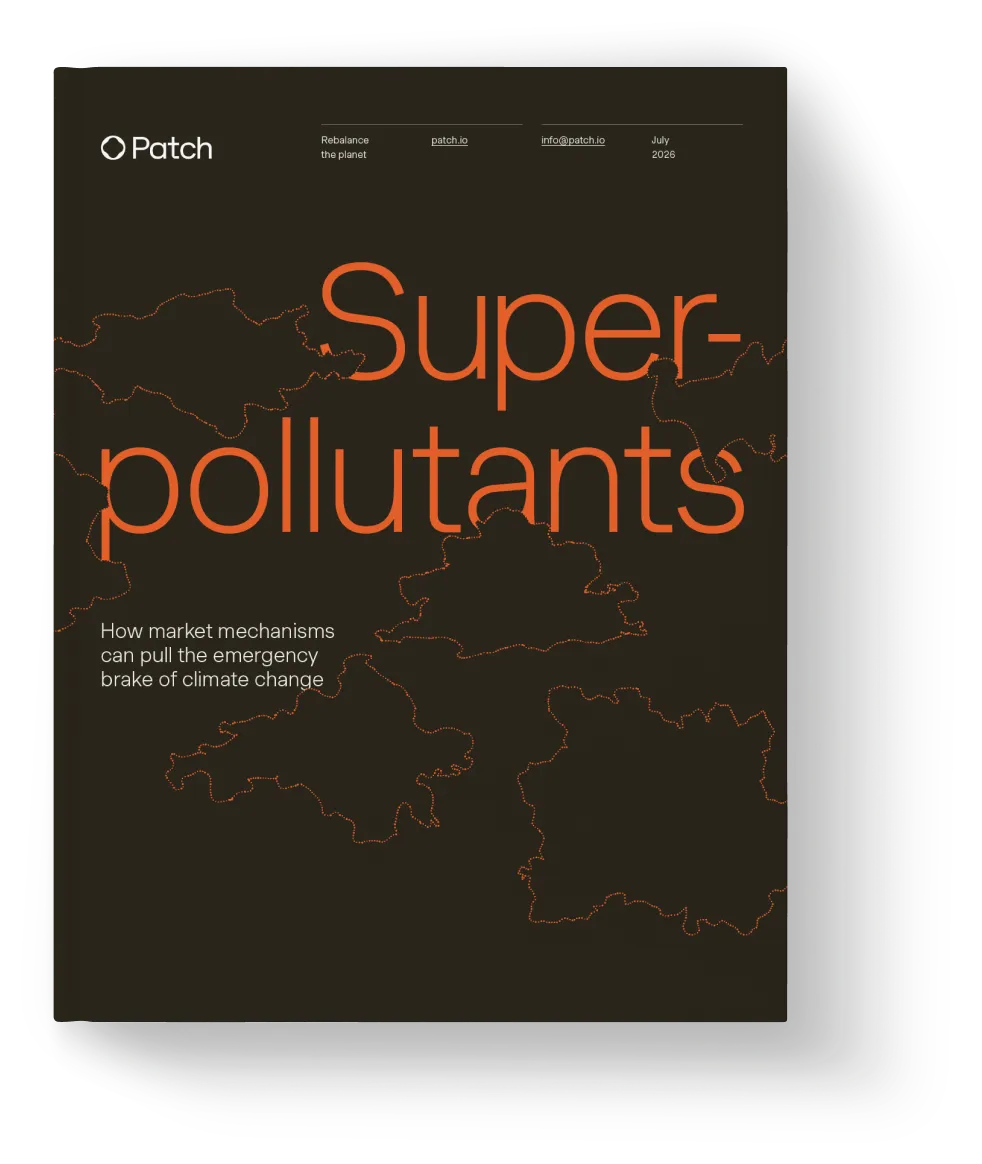
Superpollutants
Superpollutants — methane, nitrous oxide, and legacy refrigerants — are responsible for roughly half of all observed warming since the Industrial Revolution. Some are 13,000 times more potent than CO₂. And because they clear the atmosphere in years, not centuries, reducing them today produces faster climate results than almost anything other action or asset in a corporate program.
This guide covers what superpollutants are, how carbon markets address them, what procurement looks like across four project types, and where they fit in SBTi’s new Ongoing Emissions Responsibility (OER) framework.

A little information, please

What’s inside
- The science: How methane, nitrous oxide, and legacy refrigerants compare to CO₂ in potency and atmospheric lifetime — and why near-term action on them matters so much.
- The four project types: Superpollutant destruction, industrial emissions capture, agricultural mitigation, and landfill gas — with pricing, supply dynamics, and integrity considerations for each.
- A procurement playbook: When spot purchasing is the right call, when multi-year offtakes make more sense, and where buyers most often go wrong.
- Standards alignment: Where superpollutants fit in the SBTi OER framework — what they qualify for, and what they don’t.